What if you could run your business in 5 hours a day, not 8?
You run your own business, and a big part of your week goes on keeping it running instead of on the work you actually get paid for.
Have you ever wondered how much time the repetitive tasks eat up?
- Results you see right away
- Fitted to how you work
- More time for yourself
This is what the average one-person business has lost since January just keeping itself running
$0
27 h a month × $75
Symptoms
See if this sounds familiar
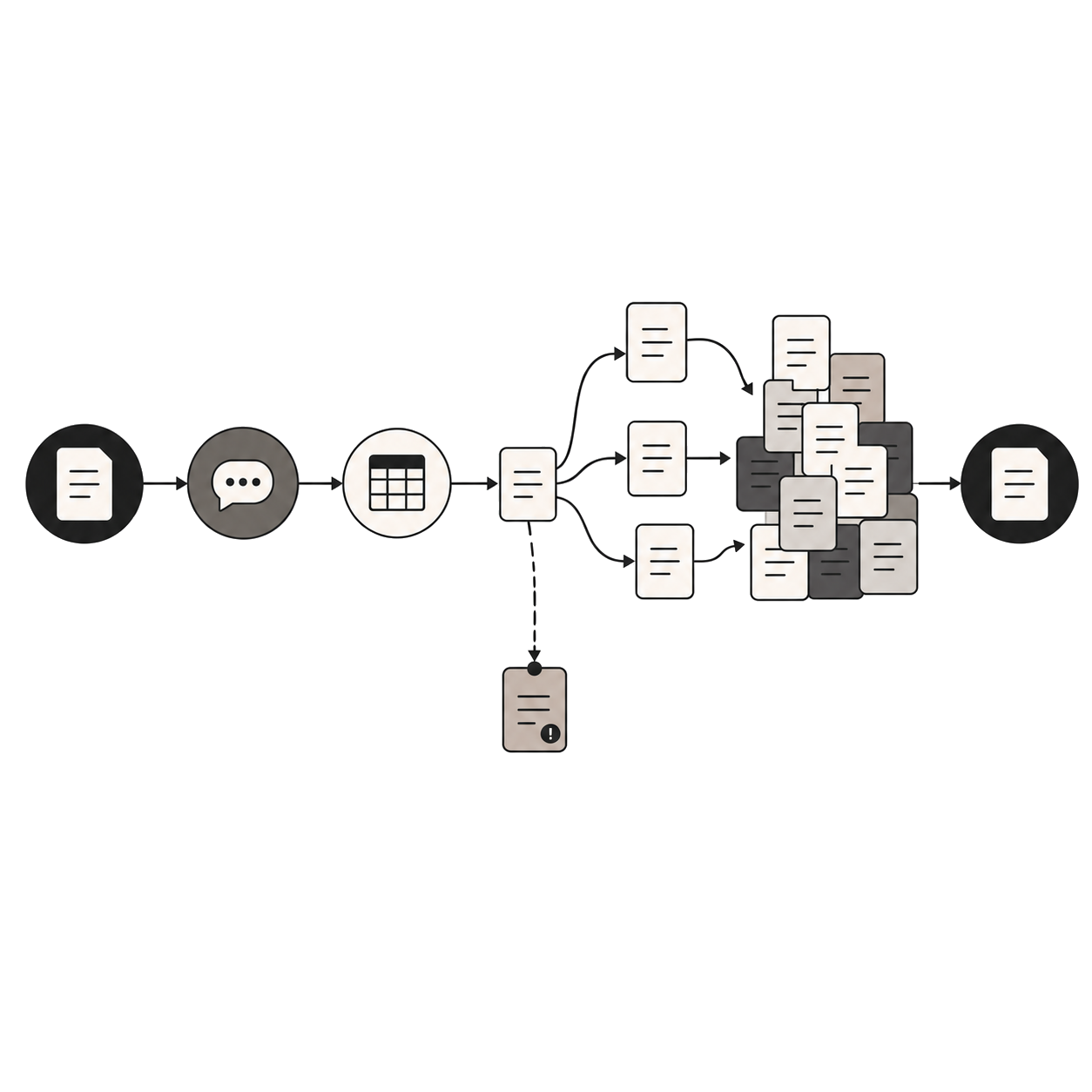
- You type the same details into a message, then a spreadsheet, then your invoicing program.
- For the fortieth time this month, you explain the same thing from scratch, in your own words.
- You’ve been meaning to write to someone who hasn’t paid, and it’s been three days.
- There’s a task you put off every single time because you dislike it so much.
- You have no time to think about strategy because you’re behind on the day-to-day.
- Again you cancel plans with friends because a client is still waiting for an overdue summary.
The other side
It can look different
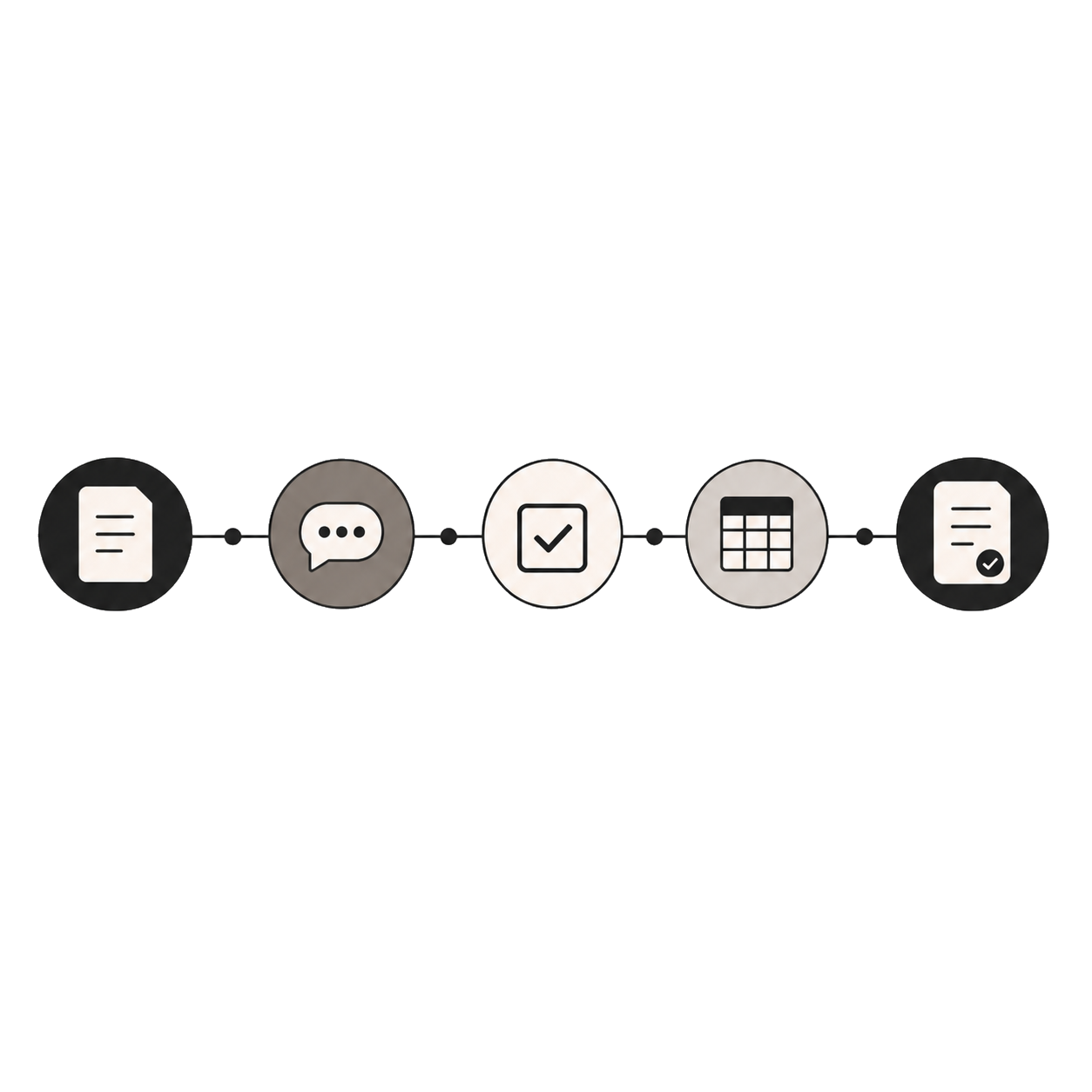
- Your client enters their details once, in a form, and you already see them in the program where you write invoices.
- The question you’ve answered forty times already has a ready answer. It goes out by itself, in your words.
- The reminder about the late payment went out on Tuesday. You didn’t spend three days working up to it, because you didn’t have to.
- The task you can’t stand got done overnight. In the morning you only check that it went well.
- Dinner with friends stays in your calendar, because the overdue summary took you 5 minutes with an automation.
Working together
How working together goes
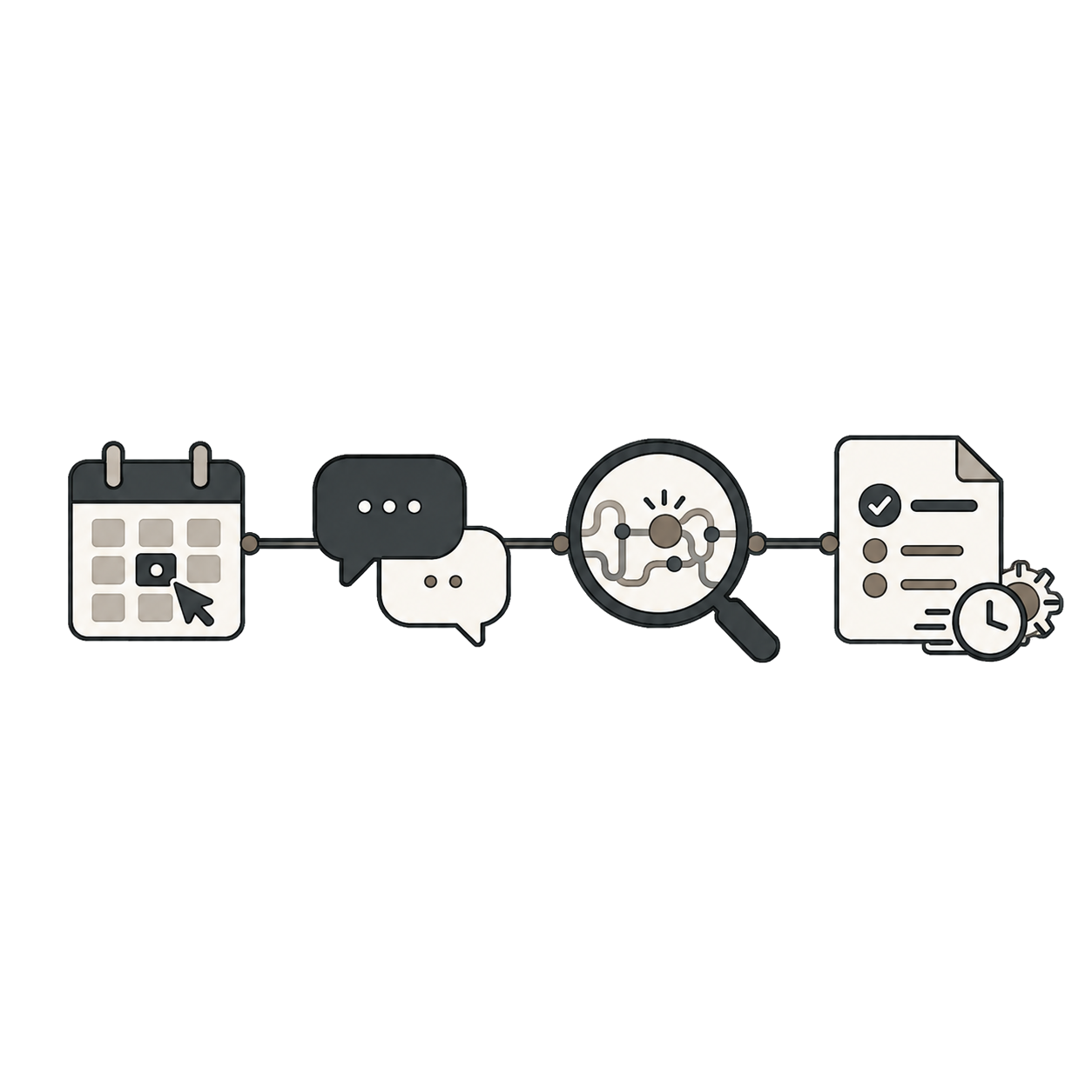
We start with a 30-minute consultation, at a time that suits you and with no preparation
- 01
You pick a time
You click “Book a consultation” and choose an hour that suits you. There’s nothing to prepare.
- 02
We talk
We meet on Google Meet and talk about you, your business and your goals. We look at what gets in your way day to day, and you describe it in your own words, the way you see it.
- 03
I ask questions
I’ll ask about things you might not expect. A fresh pair of eyes spots what looks like ordinary routine from up close.
- 04
You get a recommendation
Within two days of the call I send you my recommendation: what to automate first in your business, and why.
- 05
I build your automation
Within a few days or weeks (depending on the automation and the process itself) you get a finished automation with instructions for using it.
- 06
I look after it
Every project gets 30 days of care: I watch how it runs and any errors, and if something is off, I fix it.
- 07
After 30 days you get full documentation
With it you can keep the automation running yourself, hand it to someone else, or carry on working with me on a monthly care plan.
Scope
What that means in practice
A first reply within a minute, not the next day
Inquiries from email, your form and Instagram land in one place, and the client gets a proper answer while they're still asking. Not on Friday afternoon, after they've already written to someone else.
A quote the same day, not over the weekend
What the client described becomes a ready draft of your offer, with your prices and terms. You read it, tweak a sentence, send it. Instead of putting every one together from scratch.
Automatic reminders for missing materials
A scan, a photo or a go-ahead on the quote is missing and the work is stuck. A reminder goes out automatically every few days until the file arrives.
A conversation that turns itself into notes
After the meeting you have a summary, what was agreed and a to-do list, in the client's file, not on a scrap of paper. The tasks from the transcript are handed out automatically to the people responsible for them.
Clients come back because you got in touch at the right moment
Not a month later because they happened to remember, but when their plan is running out, a check-up is due or an inspection is coming. And the request for a review goes out right after the service.
Month end done in fifteen minutes
Invoices are created from what actually happened, and unpaid ones chase themselves. On the morning of the 1st you already have the summary of how much came in and from whom.
Examples
What it looks like in practice
Amounts are worked out at $75 an hour and rounded down. All examples
Industries
Pick your industry and see what you’re losing
Calculate
Work it out with your own numbers
Pick your industry and move three sliders. You’ll see what running your own business costs you and how much of that you could win back.
- What it costs you each month
- $0
- What you could win back each month
- $0
- Over a year
- $0
Worked out on the assumption that 70% of this work can be automated.
Boundaries
What I don’t do
- I won't make you bend to processes you'll never actually use.
- I won't build tools that nobody touches three months later.
- I won't push AI into everything because it's fashionable. Not every business needs an agent.
- I won't build an automation that doesn't give you real time back.
Who
Who I am

I have spent 12 years as a quality and automation engineer. My day job is removing repetitive work from how software gets built, and now I do the same for small and mid-sized businesses. You didn't start your company to answer the same emails every evening and retype data from one system into another. My job is to give those hours back to you.
I don't start with tools, and I don't push AI where it isn't needed. I take the technical side off your hands, because what matters to you is the result: does your work actually get faster? Let's have a free call with no strings attached. We'll find out how much time is slipping away and what we can do about it.
Start by finding out what it costs you
Three minutes, the result right on screen, and no email needed to begin.
I take on a limited number of projects at a time.